How to Increase Domain Authority in 2026: 7 Proven Strategies
Sat,14 Feb 2026 18:40:00- Font Size
- Share Content
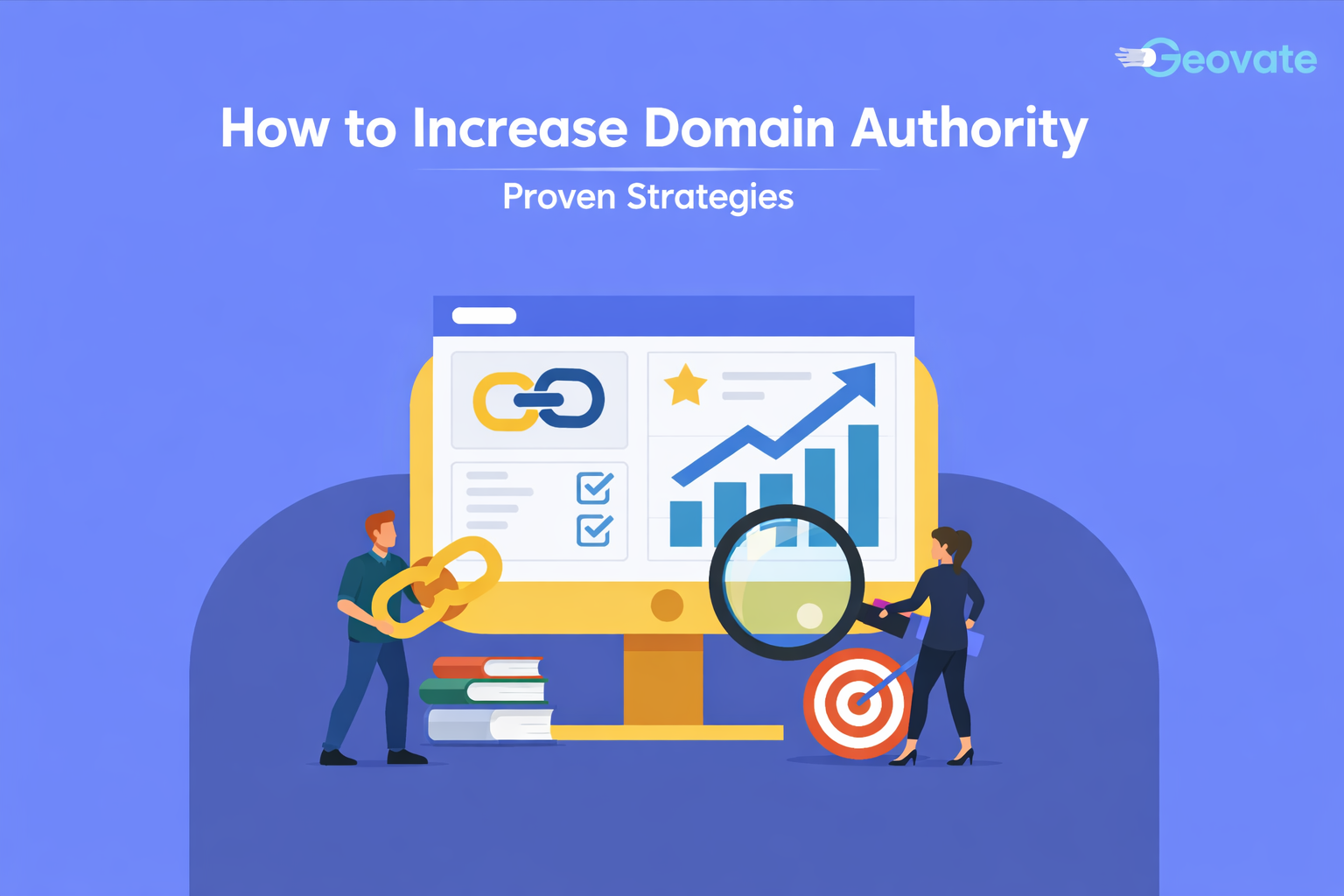
If you want your website to rank higher on Google and attract more organic traffic, improving your Domain Authority (DA) should be a top SEO priority. Domain Authority is a comparative metric that predicts how likely a website is to rank in search results based largely on backlink quality, content strength, and overall SEO health.
At Geovate, we follow data-driven strategies inspired by industry leaders like Backlinko to help businesses build real authority — not vanity metrics.
Let’s dive into the most effective ways to increase your domain authority in 2026.
📊 What Is Domain Authority and Why It Matters
Domain Authority (DA) is a score from 1–100 developed by Moz to estimate a website’s ranking potential. Higher scores generally indicate stronger ability to rank in search results.
While Google doesn’t directly use DA, the factors behind it — especially backlinks and content quality — strongly influence real rankings.
✅ Higher DA → Better credibility
✅ Stronger backlink profile
✅ Greater organic visibility
🔥 7 Proven Ways to Increase Domain Authority
Below is an expanded, actionable version of the framework Geovate uses to grow real authority. Each section includes practical steps and what to measure.
1️⃣ Build High-Quality Backlinks (Priority #1)
Backlinks remain the strongest authority signal in modern SEO. Search engines treat high-quality links as votes of confidence. However, not all links are equal — relevance, authority, and placement matter far more than raw quantity.

✅ What Geovate Recommends (Action Plan)
Guest Posting (Authority-First)
- Target sites with higher DA than yours
- Prioritize real traffic sites (check via Ahrefs/SEMrush)
- Place contextual links inside content (not author bio only)
Digital PR & HARO Outreach
- Respond to journalist queries daily
- Provide unique expert quotes
- Build relationships with reporters
Resource Link Building
- Create linkable assets (stats pages, tools)
- Reach out to pages that curate resources
- Use broken link building for quick wins
Strategic Partnerships
- Industry collaborations
- Co-marketing campaigns
- Podcast guest appearances
📊 KPIs to Track
- Referring domains growth
- Authority of linking sites
- Link relevance
- Link velocity trend
👉 Golden Rule: One contextual link from a relevant authority site can outperform dozens of weak directory links.
2️⃣ Create Link-Worthy, High-Value Content
Great backlinks usually follow great content. If your content isn’t worth citing, link building becomes an uphill battle.
🎯 Content Types That Earn Links (With Why They Work)
Original Research & Data Studies
- Highly cite-worthy
- Journalists love unique data
- Generates passive backlinks
Ultimate Guides (3000+ words)
- Rank for many keywords
- Become reference resources
- Build topical authority
Industry Statistics Pages
- Attract natural citations
- Great for passive link building
- Easy to update annually
Free Tools & Calculators
- High shareability
- Strong link magnets
- Increase dwell time
Expert Roundups
- Built-in promotion from contributors
- Authority association
- Social amplification
💡 Geovate Tip: Before publishing, ask:
“Is this significantly better than the top 5 results?”
If not — upgrade it.
3️⃣ Improve Your Technical SEO Foundation
Even the best backlinks and content won’t perform if your technical SEO is weak. Technical health ensures search engines can crawl, index, and trust your site.
🔧 Key Technical Factors (With Benchmarks)
Page Speed Optimization
- Target: <2.5s Largest Contentful Paint
- Compress images
- Enable caching
- Use CDN
Mobile Responsiveness
- Fully responsive design
- No mobile usability errors
- Touch-friendly UI
Clean Site Architecture
- Flat structure
- Logical categories
- Strong crawl paths
Proper Indexing Controls
- Fix crawl errors
- Optimize robots.txt
- Maintain clean sitemap
📊 Technical SEO KPIs
- Crawl errors
- Core Web Vitals
- Indexed pages trend
- Mobile usability score
4️⃣ Strengthen Your Internal Linking Structure
Internal links distribute authority across your site and help Google understand page importance.

🚀 Why Internal Linking Matters
A strong internal linking strategy:
- Passes link equity
- Improves crawl depth
- Boosts keyword rankings
- Increases time on site
✅ Geovate Best Practices
Link From Authority Pages
- Use pages with backlinks to boost weaker pages
Use Descriptive Anchor Text
- Avoid generic anchors like “click here”
- Include partial keywords naturally
Eliminate Orphan Pages
- Every important page should have internal links
Keep Important Pages Within 3 Clicks
- Improves crawl efficiency
- Enhances UX
📊 KPI to Watch
- Internal link count per page
- Crawl depth
- Pages with zero internal links
5️⃣ Remove Toxic and Spammy Backlinks
Bad links can dilute your authority and create trust issues. Regular backlink audits are essential.

🔍 Geovate’s Link Audit Process (Step-by-Step)
Step 1: Identify Toxic Domains
- Low authority
- Irrelevant niches
- Link farms
Step 2: Review Anchor Text
Watch for:
- Exact-match spam anchors
- Foreign language spam
- Casino/pharma links
Step 3: Manual Removal Outreach
- Email webmasters first
- Document attempts
Step 4: Disavow Harmful Links
- Use Google Disavow Tool carefully
- Only for clearly toxic links
Step 5: Monitor Link Velocity
- Sudden spikes = red flag
6️⃣ Optimize for Organic Traffic Growth
Authority correlates strongly with real organic visibility. Sites that consistently gain traffic tend to build stronger authority signals.
📈 Ways to Boost Organic Traffic (Geovate Framework)
Target Long-Tail Keywords First
- Lower competition
- Faster wins
- Builds topical authority
Refresh Outdated Content
- Update stats
- Improve depth
- Add FAQs
Optimize for Search Intent
Match content to:
- Informational
- Commercial
- Transactional
- Navigational
Improve CTR With Better Titles
- Add numbers
- Use brackets
- Include power words
📊 Watch These Metrics
- Organic clicks
- Impressions
- Average position
- CTR
7️⃣ Maintain Consistency (The Long Game)
Domain Authority growth compounds over time. The sites that win are the ones that execute consistently for months.

🧭 What Consistency Looks Like at Geovate
Weekly
- Publish optimized content
- Internal link updates
Monthly
- Acquire quality backlinks
- Update top pages
- Monitor competitors
Quarterly
- Technical SEO audit
- Content pruning
- Authority benchmarking
Ongoing
- Performance tracking
- Strategy refinement
👉 Geovate Insight: Authority is a compounding asset — steady execution beats short bursts.
🚫 Common Mistakes That Kill Domain Authority
Avoid these high-risk errors:
❌ Buying low-quality backlinks
❌ Publishing thin or AI-only content
❌ Ignoring technical SEO issues
❌ Over-optimizing anchor text
❌ Building irrelevant niche links
❌ Sudden unnatural link spikes
⚠️ Reality Check: Shortcuts may create temporary gains but often trigger long-term ranking drops.
📈 How Long Does It Take to Increase Domain Authority?
⏱️ Realistic Timeline
- Small improvements: 2–3 months
- Noticeable growth: 4–8 months
- Major authority gains: 9–18 months
🎯 What Impacts Your Speed
- Current DA baseline
- Niche competition
- Quality of backlinks
- Content publishing frequency
- Technical SEO health
- Domain age
💡 Geovate Benchmark: Most new sites need ~6–12 months of consistent SEO to see meaningful DA growth.
Frequently Asked Questions
Q1. What is a good Domain Authority score in 2026?
A good Domain Authority (DA) score depends on your industry and competitors. Generally, a DA above 40 is considered strong for most niches, while highly competitive industries may require DA 60+ to rank effectively. Focus on improving relative to your competitors rather than chasing a specific number.
Q2. How long does it take to increase Domain Authority?
Domain Authority growth typically takes 3–6 months to show early movement and 6–12 months for significant improvement. The timeline depends on your backlink quality, content consistency, technical SEO health, and niche competition.
Q3. Do backlinks still matter for Domain Authority in 2026?
Yes, high-quality backlinks remain the most important factor influencing Domain Authority. However, relevance, authority, and natural link placement matter far more than the total number of links.
Q4. Can Domain Authority decrease over time?
Yes. DA can drop if you lose quality backlinks, competitors improve faster, your site has technical issues, or you gain spammy links. Regular backlink audits and consistent SEO efforts help maintain and grow your authority.
Q5. Is Domain Authority a Google ranking factor?
No, Domain Authority is a third-party metric created by Moz and is not used directly by Google. However, the factors that influence DA — such as backlinks, content quality, and technical SEO — strongly impact real search rankings.