How Videos Dominate Google’s AI Overviews
Mon,19 Jan 2026 18:13:00- Font Size
- Share Content
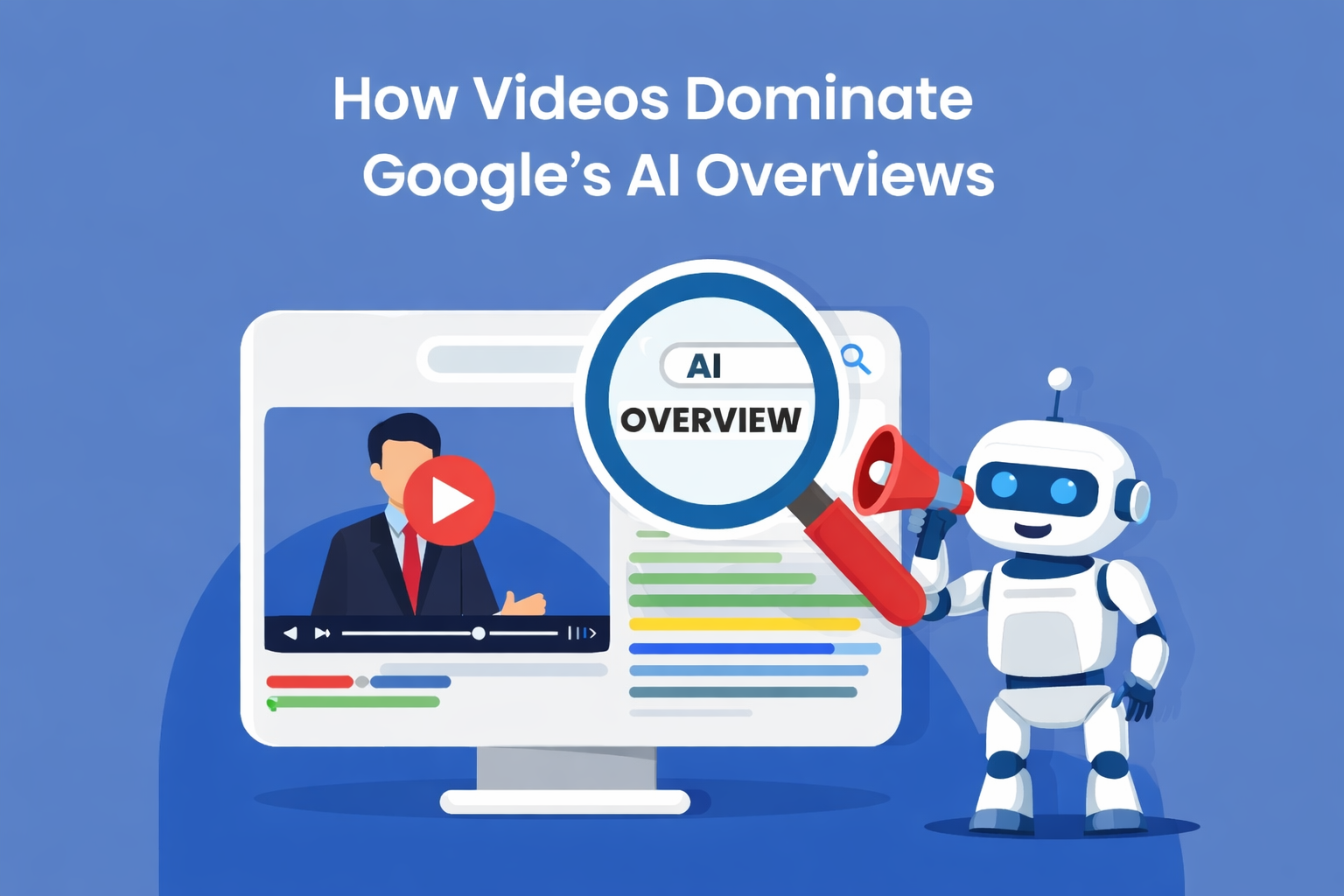
Google’s AI Overviews are changing how people discover content. Instead of scrolling through 10 blue links, users now get an AI-generated summary with citations pulled from trusted sources. And one source is showing up again and again: YouTube.
If you’re working on GEO (Generative Engine Optimization) and AI search visibility, YouTube is no longer just a “nice-to-have.” It’s becoming a core channel for getting cited inside AI-driven search results.
Why YouTube Is Showing Up So Often in Google AI Overviews
AI Overviews are designed to answer queries quickly, clearly, and confidently. Video content fits perfectly into that goal because it often provides:
- Step-by-step demonstrations
- Real product walkthroughs
- Tool comparisons
- Clear explanations for beginners
For many SaaS and tech-related searches, YouTube videos are often the most “complete” answer format available.
That’s why Google is integrating YouTube heavily into AI Overviews—especially for queries where users want recommendations, tutorials, or real examples.
YouTube Citations Are Dominating Tech + SaaS Queries
YouTube is being cited at a massive scale inside AI-driven features, particularly for tech and SaaS keywords.
For example, searches like:
- “best AI note taker”
- “email automation”
- “best AI tools for productivity”
often trigger AI Overviews that include multiple YouTube videos, sometimes showing up to three video citations within the overview itself.
This is a major shift: instead of ranking only through written content, brands can now earn visibility by ranking through video citations.
Real Search Examples: YouTube Videos Appearing in AI Overviews
Let’s look at how this appears in real searches:
Example 1: “Best AI note taker”
Google’s AI Overview may include:
- A video that compares top AI note-taking tools
- Another video that aggregates multiple options
- Sometimes even a third supporting video citation
These are typically “best tools” videos that match the user’s buying intent.
Example 2: “Email automation”
This keyword often triggers:
- One video shown at the top of the AI Overview
- Another long-form tutorial or walkthrough video cited below
Meaning Google is pulling both:
- comparison content (what’s best)
- how-to content (how to use it)
Why Keyword-Focused Thumbnails Are Working
A pattern that keeps showing up in AI Overview video citations is simple but powerful:
Many videos include the exact keyword phrase in the thumbnail.
For example:
- “Best AI Note Taker”
- “Email Automation Tools”
- “Top AI Tools 2026”
This matters because thumbnails influence:
- Click-through rate (CTR)
- Relevance matching signals
- Topic clarity for the algorithm
If your goal is to increase YouTube visibility for AI search, adding the keyword to your thumbnail can improve alignment between the video and the query.
It’s Not Just Google: YouTube Is Also Cited in LLM Search Results
This trend isn’t limited to AI Overviews.
Across AI search platforms like:
- ChatGPT
- Perplexity
- Google AI Mode
YouTube is still one of the most frequently referenced sources.
In many tracking datasets, Reddit often ranks as the top citation source, but YouTube consistently appears among the top sources as well—especially for software and tool-based searches.
This is exactly why marketers are now actively searching for How to rank on chatGPT and How to rank on Perplexity as part of a modern GEO strategy. If your videos are well-optimized, they can show up not only in traditional search results, but also as citations inside AI-generated answers.
Perplexity in particular tends to pull YouTube citations frequently—especially for tutorials, product reviews, and comparisons—making YouTube a powerful channel if your goal is to improve visibility and learn How to rank on Perplexity for high-intent queries.
What Types of YouTube Videos Get Cited in AI Search?
If you want to rank inside AI Overviews and other AI search engines, the format of your videos matters.
The most commonly cited types include
1) “Best Tools” Comparison Videos
Examples:
- Best AI note takers
- Best CRM for small businesses
- Best email automation tools
These perform well because they match high-intent searches.
2) Tutorials and Walkthroughs
Examples:
- How to automate emails
- How to set up a workflow
- How to use a specific SaaS tool
AI engines love these because they solve the user’s problem directly.
3) “X vs Y” Videos
Examples:
- Notion AI vs Otter
- Mailchimp vs Klaviyo
- HubSpot vs Salesforce
Comparison content is easy for AI to summarize and cite.
4) Problem/Solution Videos
Examples:
- Why your email automation isn’t working
- Fix onboarding drop-offs
- Reduce churn using automation
These match question-based searches and troubleshooting intent.
YouTube SEO for GEO: How to Increase Your Chances of Being Cited
To win visibility in AI Overviews, you need to treat YouTube like an SEO channel—not just a branding platform.
Use Search-First Video Titles
Your title should match how users search.
Good examples:
- Best AI Note Taker Tools (Top Picks + Demo)
- Email Automation Tutorial (Step-by-Step Setup)
- Best CRM for Startups (Comparison + Pricing)
Add Keyword + Intent in the First 30 Seconds
AI systems prefer content that answers quickly.
In the opening of your video:
- state the keyword naturally
- explain what you’ll cover
- confirm the outcome
Example:
“In this video, I’m breaking down the best AI note-taker tools and showing you which one is best depending on your workflow.”
Use Chapters to Improve Discoverability
Add YouTube chapters like:
- Intro
- Tool #1 Overview
- Tool #2 Pricing
- Best for Teams
- Final Recommendation
This improves:
- retention
- navigation
- clarity (which helps AI interpretation)
Optimize the Description Like a Mini Blog Post
Include:
- the keyword in the first line
- a short summary
- tool names
- key takeaways
Pair the Video With a Supporting Web Page
This is a GEO multiplier.
Publish a blog page that includes:
- embedded video
- transcript or summary
- comparison table
- FAQ section
This helps you rank in:
- traditional SEO
- AI Overviews
- LLM citations
The Bottom Line: Don’t Ignore Video If You Want AI Search Visibility
AI Overviews are already reshaping search behavior, and YouTube is one of the most cited content sources inside these AI-driven experiences—especially for tech, SaaS, and tool-based queries.
If you want to win in GEO and AI search, the play is clear:
Create comparison videos, publish tutorials, optimize your YouTube SEO, and treat video like a primary ranking asset—not an extra channel.
Because in AI search, the brands that get cited are the brands that get discovered.
Frequently Asked Questions
Q1: Why is YouTube appearing so often in Google AI Overviews?
YouTube appears frequently in AI Overviews because videos provide clear demonstrations, tutorials, and product comparisons that help Google generate confident answers quickly.
Q2: What types of YouTube videos get cited in AI search results?
Comparison videos (“best tools”), step-by-step tutorials, “X vs Y” videos, and problem/solution videos are most commonly cited because they match high-intent searches and are easy to summarize.
Q3: Does adding keywords to YouTube thumbnails help with AI Overview visibility?
Yes. Keyword-focused thumbnails can improve click-through rate (CTR) and relevance signals, making it easier for YouTube’s algorithm (and Google) to understand the topic of the video.
Q4: How do I optimize YouTube videos for GEO (Generative Engine Optimization)?
Use search-first titles, mention the keyword early in the video, add chapters, write SEO-focused descriptions, and support the video with a related blog page including transcript and FAQs.
Q5: Can YouTube videos rank inside ChatGPT or Perplexity results?
Yes. AI tools like ChatGPT and Perplexity often cite YouTube for tutorials, reviews, and comparisons—especially for SaaS, tools, and tech-related queries.
Q6: Should I publish a blog post along with my YouTube video?
Yes. A supporting blog page with an embedded video, transcript, summary, and FAQs improves visibility in both traditional SEO and AI-driven search engines.